
Finding an ESG training course that combines recognized certification with practical, career-focused material is harder than it should be. Many providers gate advanced modules behind opaque pricing or lack employer-accepted credentials needed for career progression. This comparison lists alternatives with clear credentialing and pricing so you can select an ESG course that meets professional requirements without hidden costs.
Table of contents
- Verdant institute
- Earth academy
- ESG academy
- Brainiegroup GmbH
- Sustainability academy
- Comparison of alternatives
Verdant institute
At a glance
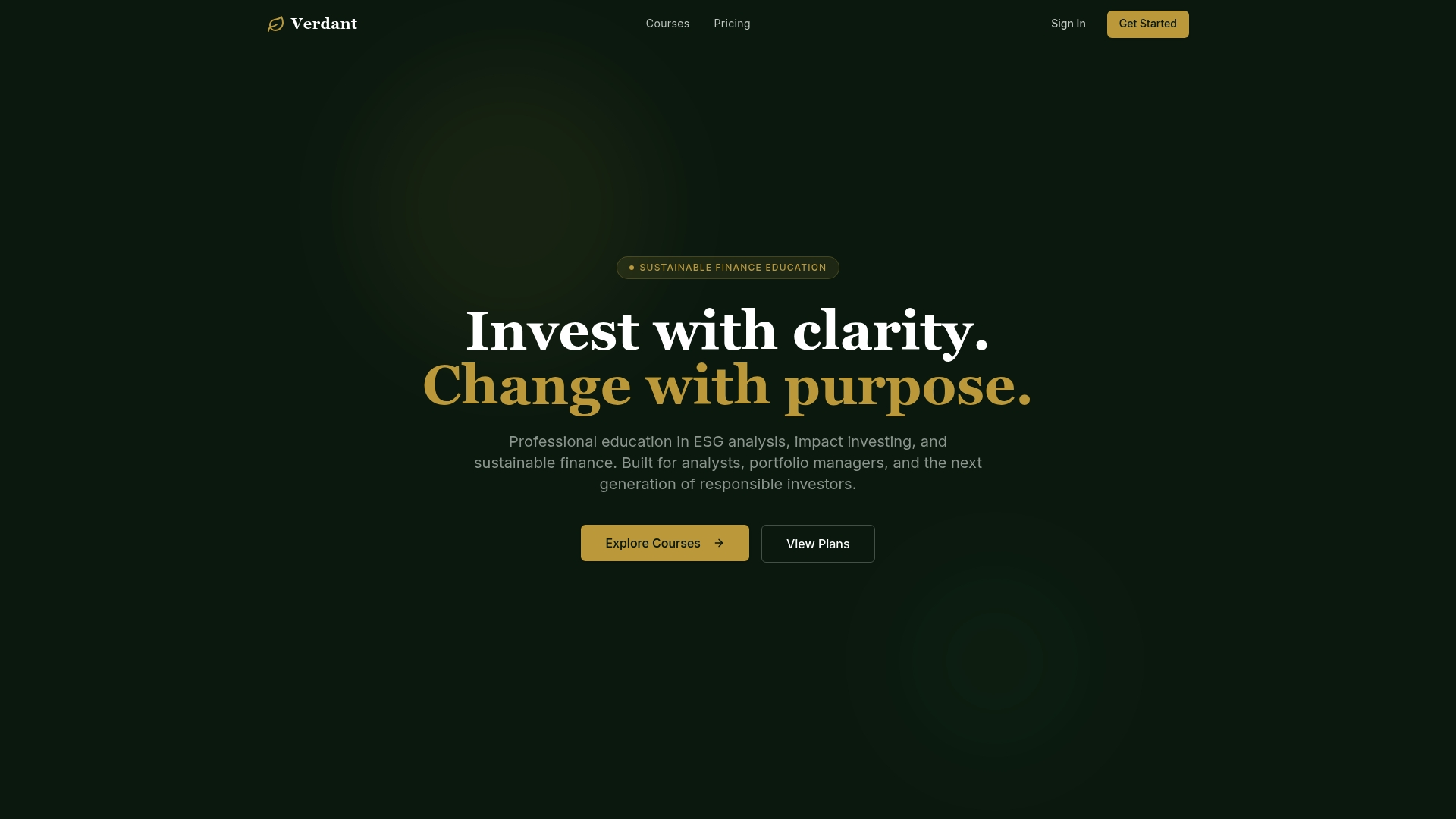
The library contains 16 courses and 160+ lessons spread across four learning tracks. The platform tracks CPD hours and issues downloadable certificates for completed courses. Subscription plans start at $18 per month for students and include professional tiers with credentialing options.
Core features
Verdant Institute organizes material into four structured tracks: Academic Foundations, Foundations for beginners, Deep Dives, and Advanced Practice. The curriculum covers foundational theory, asset class deep dives, and practitioner modules on transition finance and net zero strategies. The system records CPD hours and issues certificates you can download after course completion. Content mixes lessons, quizzes, and real world case studies for applied learning.
Key differentiator
Offers a layered historical perspective on sustainable finance combined with practical, credentialed courses for ongoing professional development. The curriculum ties regulatory history and philosophical context to technical skills in ESG integration. That combination helps learners link why frameworks exist to how to use them in portfolio analysis and reporting.
Pros
-
Structured learning paths tailored for students and professionals, making course selection straightforward.
-
CPD tracking and downloadable certificates add measurable professional value for credentialing and appraisal.
-
Library content includes 16 courses and 160+ lessons that move from basics to advanced practitioner topics.
-
Flexible subscriptions with a low entry point. Student access starts at $18/month, while professional plans add deeper credentialing and practice modules.
Cons
- Premium plans at $158 per month provide full access and certifications but may be expensive for some learners or small teams.
Who it's for
Students entering sustainable finance who need a structured curriculum and verifiable CPD hours. Finance professionals who want to add ESG integration skills and formal certificates to their CVs. Training managers at asset managers or advisory firms who need a subscription model for ongoing team education.
Unique value proposition
Subscription pricing that bundles CPD tracked coursework, downloadable certificates, and advanced practitioner modules such as transition finance and net zero strategies. That model replaces one off courses and centralizes continuing education under a single subscription for teams or individuals. For hiring managers, the subscription simplifies verification of completed hours and credentials during candidate screening.
Real world use case
A financial analyst completes the ESG Integration in Equity Analysis course and downloads a certificate to include with a job application. The certificate documents CPD hours for the analyst and signals familiarity with practical integration techniques. The same analyst can follow Advanced Practice lessons to prepare for a transition finance assignment.
Pricing
Plans begin at $18 per month for students. Professional subscriptions start at $58 per month and include more advanced tracks and certification paths. A full access plan with credentials is available at $158 per month.
Website: https://verdantinstitute.com
Earth academy
At a glance
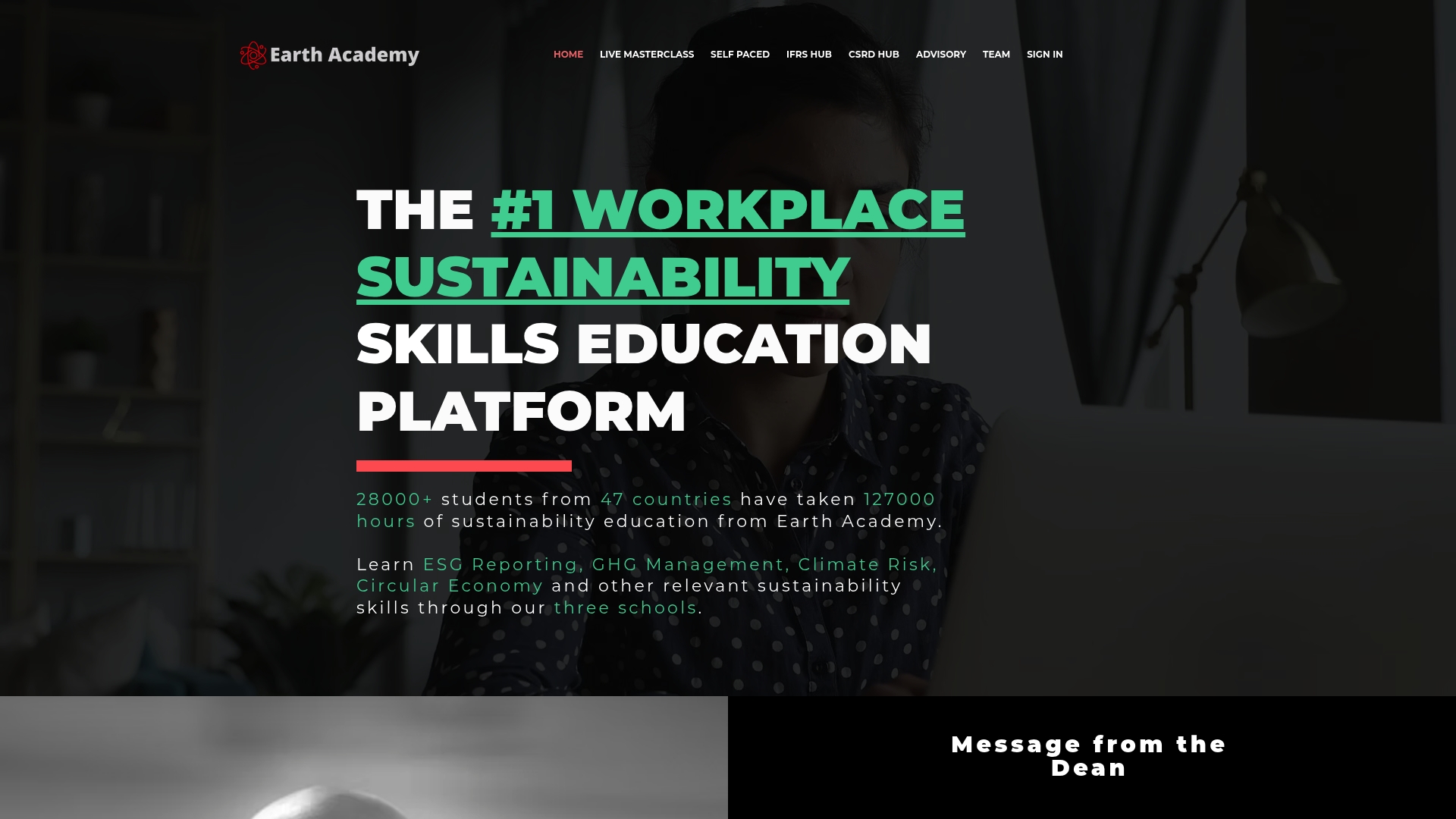
Earth Academy reports over 28,000 students across 47 countries. That reported reach shows the platform attracts learners from many regions. The site focuses on practical sustainability topics useful to professionals and career changers.
Core features
-
Online course catalog covering ESG reporting, GHG management, climate risk, circular economy, and related subjects. Courses target applied skills used in corporate and investment settings.
-
Educational content taught by industry professionals, including a dean and a CEO, who provide practitioner perspectives and case examples.
-
Multiple course levels from beginner to advanced, so learners can follow a sequence or pick standalone modules that match their experience.
-
Delivery options include self-paced lessons and more structured programs to fit both independent learners and timed cohort study.
Key differentiator
Earth Academy centers on widening access to sustainability training. The vendor emphasizes making sustainability knowledge available to a global audience through online formats. That focus makes the platform appropriate for teams and individuals outside major training hubs who need practical, role-focused learning.
Pros
-
Global student base. The reported student count above supports the claim of broad engagement and suggests the course topics resonate across regions.
-
Course depth across experience levels. The presence of beginner through advanced tracks lets a midcareer professional and a newcomer both find relevant material.
-
Practitioner-led instruction. Lessons led by a dean and a CEO bring real-world examples that help connect theory to corporate practice.
-
Flexible pacing. Self-paced options suit working professionals who must balance learning with full-time roles.
-
Focus on professional development. The curriculum emphasizes skills such as ESG reporting and climate risk assessment that finance professionals use on the job.
Cons
-
No independent third-party reviews cited publicly. The absence of external reviews makes it harder to verify long-term course quality.
-
Limited transparent pricing and certification details. Public information about fees and credential recognition is sparse.
-
Potential regional access constraints. The vendor notes possible geographic restrictions or regulatory limits that could affect enrollment in some jurisdictions.
When it may not fit
If you require clearly published pricing or standardized professional certification, this platform may frustrate you. Large organizations seeking bulk procurement with transparent enterprise rates might find the public site lacks the details they need. If you need verified external reviews before adopting training at scale, the limited public audit trail is a drawback.
Who it's for
Sustainability professionals who want practical coursework on ESG reporting and greenhouse gas management will find relevant modules. Corporate sustainability teams looking to upskill staff can use the self-paced options for staggered rollouts. Individuals exploring a move into sustainability roles will get role-focused foundations.
Real world use case
A sustainability manager enrolls in several modules to sharpen ESG reporting and GHG inventory skills. They apply course templates to the company’s reporting cycle and draft improved disclosure language. The manager then shares selected lessons with two direct reports to align internal processes.
Pricing
The vendor does not publish standard prices. According to the vendor, pricing likely varies by course or program and details are not publicly available. Contact Earth Academy for course-specific rates or institutional licensing.
Website: https://earthacademyglobal.com
ESG academy
At a glance
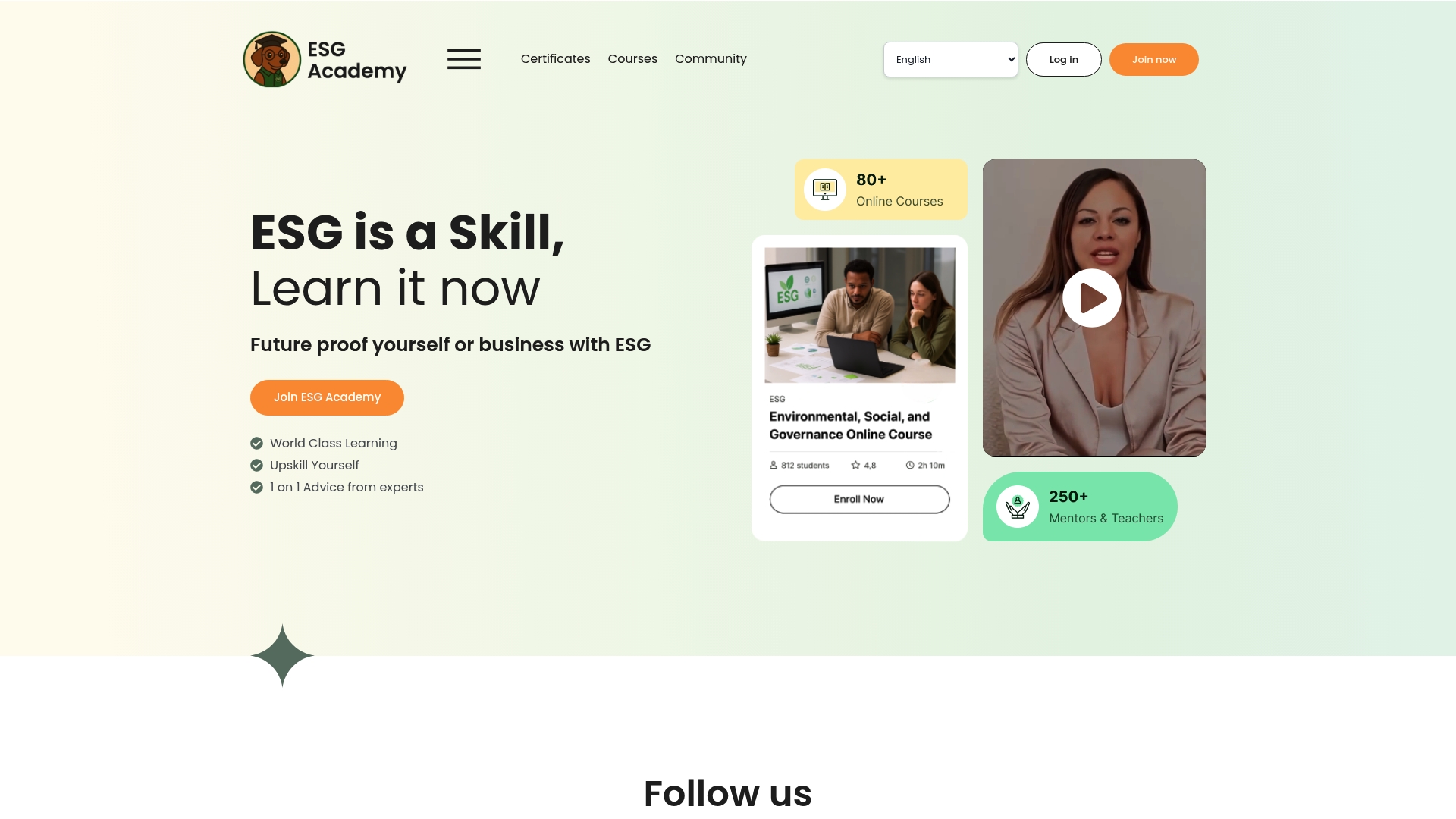
Founded by Francine Carron, ESG Academy pairs sector specific courses with practical templates and case studies aimed at working professionals. According to the company, its certificates are recognized by many employers and organizations. The platform also advertises custom training for organizations that need tailored ESG instruction and policy material.
Core features
- Structured ESG courses covering environment, social, governance topics, frameworks, and standards with sector specific modules.
- Certification programs that support career credibility and LinkedIn verification according to vendor materials.
- Community access with free resources, templates, and discussion groups for peer learning and file sharing.
- Custom enterprise training that adapts course content to an organization’s sector and internal policies.
- Practical tools and case studies for immediate classroom to workplace application.
Key differentiator
ESG Academy focuses on sector specific training plus ready to use templates and case studies. That mix helps learners apply concepts quickly at work. The platform leans toward career minded content for people who need certifications that they can present to employers.
Pros
-
Broad practical curriculum for beginners and professionals. Courses include policy, frameworks, and sector examples that reduce guesswork for learners.
-
Certificates that the vendor says employers accept. That claim supports resume and LinkedIn updates for career progression.
-
Flexible online modules for busy schedules. Learners can complete lessons asynchronously and return to case studies as needed.
-
Tailored corporate training available. Teams can commission content aligned to sector risk and compliance priorities.
-
Active community and updated materials. The platform bundles templates and discussion groups that help teams standardize practices.
Cons
-
Limited independent user reviews. Public third party feedback is scarce, which makes external validation harder.
-
Pricing transparency is weak. The vendor does not publish full plan details in public content.
-
May require extra technical resources for deep standards work. Users focused on technical compliance with standards might need supplementary specialist material.
When it may not fit
If you need peer reviewed ratings or independent student reviews for procurement, this platform may not fit. Organizations that require fully itemized public pricing will find the vendor content incomplete. Teams targeting deep technical standard setting like advanced assurance work will likely need additional specialist courses.
Who it's for
Finance professionals, sustainability managers, compliance officers, and students pivoting into ESG will find the platform useful. Small and mid sized organizations that need sector specific employee training will also fit well. The materials suit people who prioritize practical templates and employer facing certificates.
Real world use case
A mid sized manufacturing firm used ESG Academy to train its compliance team for upcoming EU reporting rules. The company assigned sector specific modules and issued certificates to staff for internal audit records. The tailored training helped the team draft initial governance updates and vendor questionnaires.
Pricing
According to the company, pricing starts at €34/month for course access and community features. The vendor notes that enterprise training and customized programs carry separate pricing, and public details may vary by region and contract.
Website: https://esgacademy.education
Brainiegroup GmbH
At a glance
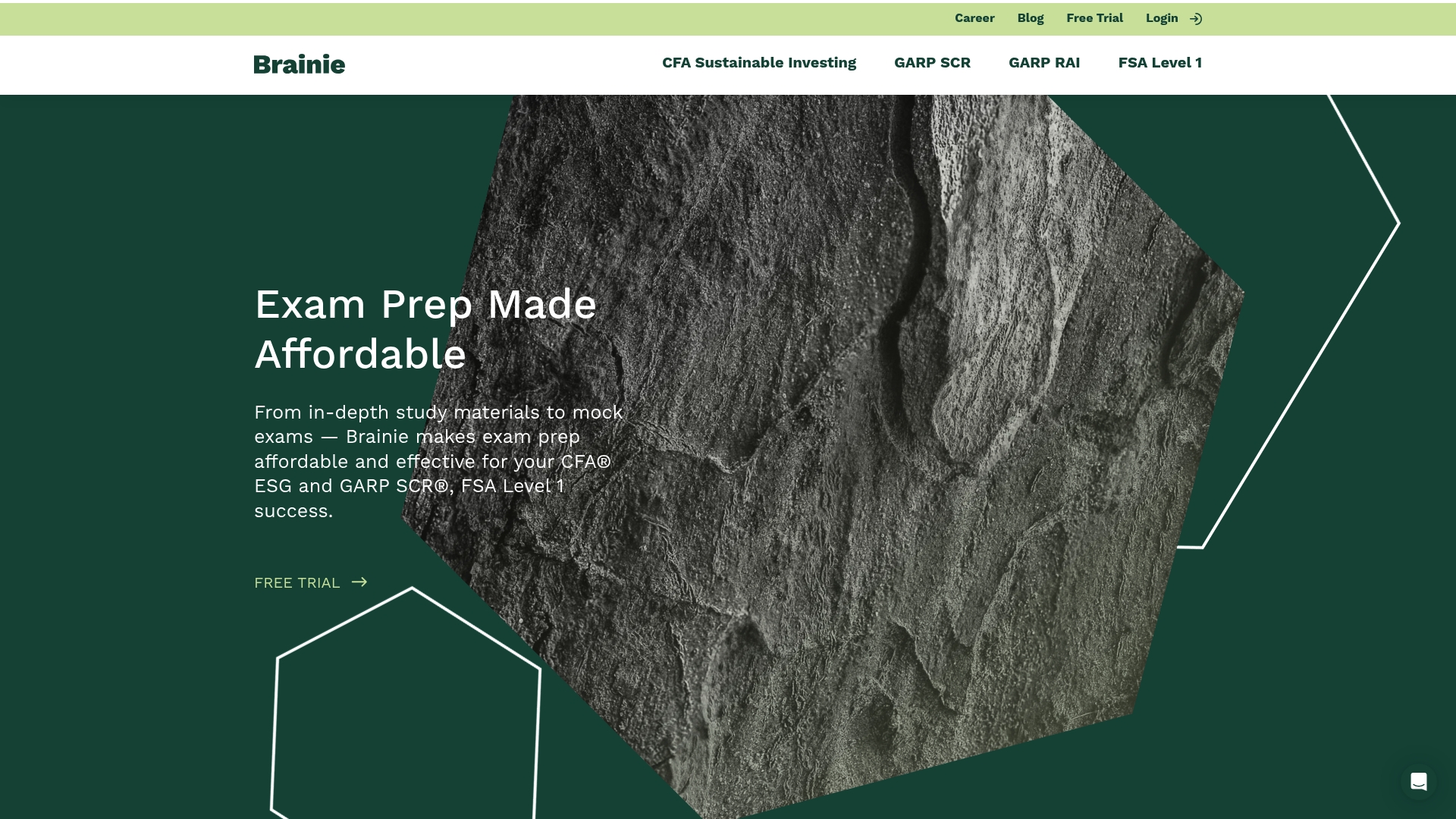
Brainiegroup reports 500+ practice questions in its question banks. The vendor pairs those questions with mock exams, video lessons, and concise revision notes focused on ESG and climate risk. Their materials target certifications such as the CFA Certificate in ESG Investing, GARP SCR, RAI, and FSA Level 1.
Core features
The product centers on exam preparation materials that mirror current certification syllabuses. It offers question banks, timed mock exams, a video lesson series, summary notes, and progress tracking for self paced study. Packages are tailored to different experience levels and devices.
- Study guides mapped to official curricula and common exam topics.
- Question bank with worked explanations and topic tagging for focused practice.
- Full mock exams that simulate test timing and format.
- Video series covering exam tips, concept walkthroughs, and worked examples.
- Short summary notes designed for last minute revision and mobile review.
Key differentiator
Brainiegroup emphasizes content curated by CFA charterholders and industry professionals. That team claim shapes the course structure and the exam focus of lessons. The vendor says the curriculum alignment targets ESG and climate risk certifications specifically, which narrows the product to sustainability and risk management exam prep.
Pros
-
Expert authored materials that reflect current certificate syllabuses and common exam emphases. This helps you prioritize study time.
-
Flexible self paced format lets busy finance professionals study around work commitments. Mobile access makes short sessions productive.
-
Realistic mock exams reproduce timing and question mix, useful for exam day pacing practice.
-
Support for multiple credentials including the CFA ESG certificate and GARP SCR helps candidates preparing across certifications.
-
The vendor advertises high user satisfaction in Google reviews, which suggests learners find the format and materials helpful.
Cons
-
The platform does not include official CFA or GARP proprietary exam questions, only proprietary practice items. That difference can matter for test fidelity.
-
Third party sources offer limited detailed feedback on individual weaknesses, making targeted remediation harder.
-
Subscription costs rise for fuller packages and tutoring, which increases total prep spend.
When it may not fit
If you need offline study with complete resource access, this product may not fit because offline access is limited. If you prefer official past paper questions from the certifying bodies, this will fall short. If you require an instructor led class with scheduled cohort interaction, this self paced model is the wrong style.
Who it's for
This is for finance professionals and students focusing on ESG and climate risk certifications who need compact, exam oriented study tools. Typical users include financial analysts, risk managers, and corporate sustainability staff. It suits candidates who can keep a disciplined self study timetable and prefer mobile friendly review.
Real world use case
A financial analyst studying for the CFA ESG exam uses the video lessons on commute and practices tagged question sets on lunch breaks. The analyst takes full mock exams on weekends to test pacing and identify weak topics. That routine leads to clearer study priorities before test day.
Pricing
Pricing varies by package and features. Entry level Silver starts at $109 for the question bank and video series. Full featured Platinum with tutoring and extended support goes up to $499.
Website: https://brainiegroup.com
Sustainability academy
At a glance
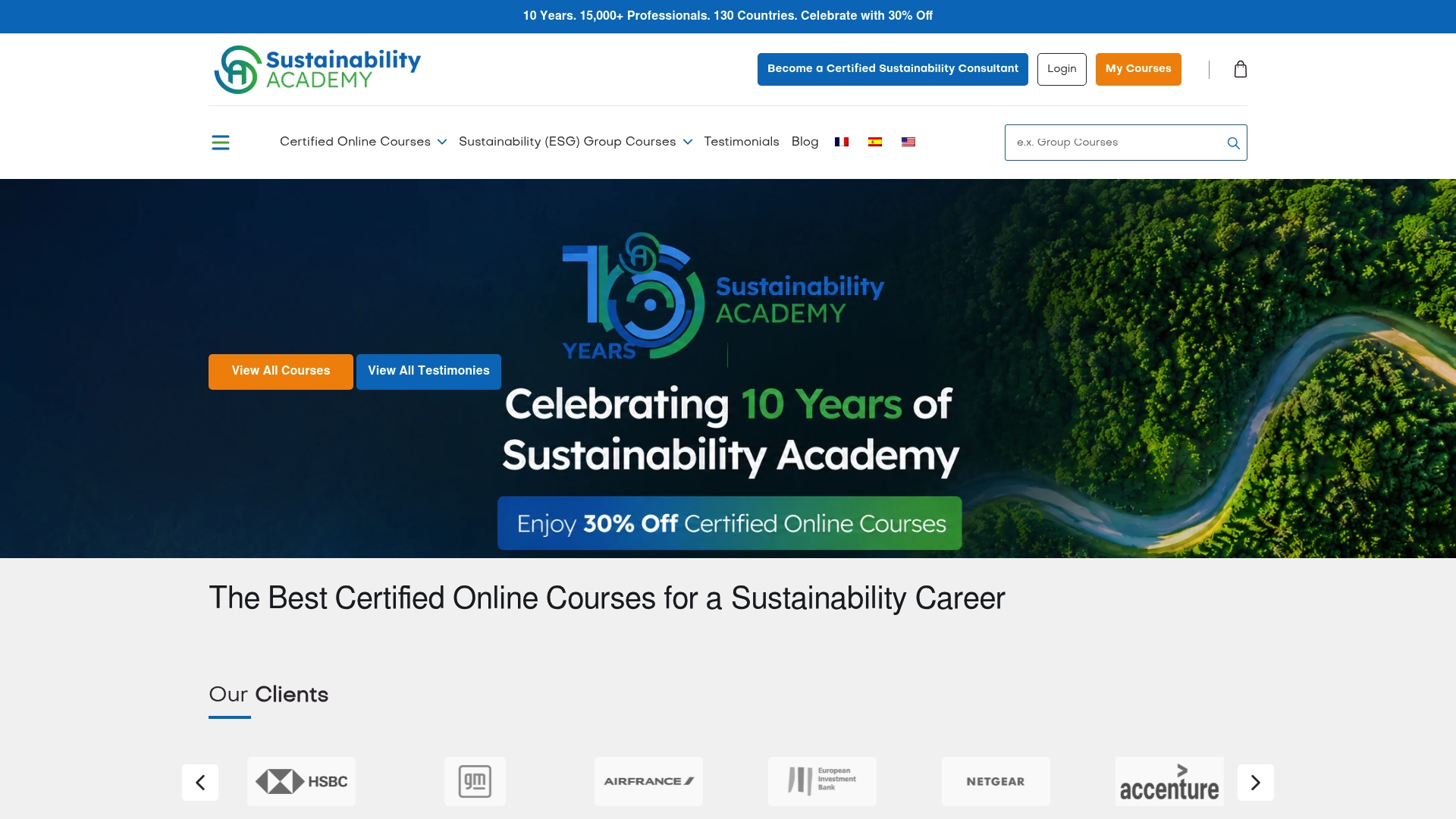
Sustainability Academy reports partnerships with global standards organizations such as GRI, SASB, PRI, and CMI. The vendor advertises courses as CPD accredited and available in multiple languages, including Spanish and French. The platform targets professionals who need credentialed, standards aligned training rather than casual awareness modules.
Core features
- Self paced online courses covering ESG reporting, carbon reduction, renewable energy, circular economy, and social impact. Each course mixes recorded lessons and case study exercises.
- CPD accredited certification programs that issue badges and credentials. The platform connects certifications to Credly for recognized digital badges.
- Multilingual course offerings in Spanish and French plus specialized modules for energy, finance, shipping, and NGOs.
- Practical case studies and sector specific modules to apply standards to real operational problems.
Key differentiator
The strongest signal is its course development by recognized sustainability experts in collaboration with leading standards organizations. That partnership focus gives the curriculum a standards first orientation useful for compliance and reporting teams. Compared with Verdantinstitute, Sustainability Academy serves a narrower need set concentrated on credentialed, standards aligned training rather than a subscription catalog of broad professional tracks.
Pros
- Vendor claims the platform is affordable and flexible. That pricing positioning helps teams who want on demand learning for staff across time zones.
- Offers Credly digital badges and CPD accreditation, which ease portfolio tracking for professionals collecting continuing professional development hours.
- Content comes from industry leaders and academics. This strengthens technical credibility for finance teams needing rigorous reporting guidance.
- Wide topic coverage spans ESG reporting, climate strategy, renewable energy, and AI applied to sustainability, which suits cross functional corporate teams.
- Partnerships with global standards bodies make course syllabi easier to map to reporting frameworks.
Cons
- Limited independent third party reviews are available; the site mainly shows internal testimonials. That makes peer validation harder to assess.
- Pricing is not presented as a consolidated structure. Courses are individually priced which can complicate budgeting for larger cohorts.
- The curriculum scope is broad. Beginners without prior exposure to sustainability concepts may find the pace dense.
Who it's for
Mid to senior level sustainability professionals, sustainability managers, CSR specialists, and finance and investment professionals will get the most value. Corporate sustainability teams that must align disclosures to international standards will find the standards oriented modules particularly relevant.
Real world use case
A multinational enrolls sustainability officers in the Diploma on Corporate Sustainability to align its reporting with international frameworks. The team uses the Credly badges to document CPD hours and to present a standardized competency record to auditors and investors.
Pricing
Not applicable — informational only. The vendor lists courses as individually priced rather than a single subscription plan. Prospective buyers should request cohort or enterprise quotes for bulk enrollment.
Website: https://sustainability-academy.org
Comparison of alternatives
When evaluating alternatives for ESG courses, several platforms present distinct strengths catering to varied learner demands. Each choice addresses specific priorities, making it essential for users to align the platform's offering with their educational or professional objectives.
Accessibility and flexibility of offerings
Earth Academy demonstrates a commitment to accessibility through its offerings aimed at a global audience, supporting learners from 47 countries. The platform's balance between self-paced and structured lessons accommodates users with varying schedules. In contrast, Verdant Institute offers a structured subscription model suited for continuous professional development but without the broader accessibility focus like Earth Academy.
Practical application and professional enrichment
ESG Academy distinguishes itself with sector-specific templates and case studies, providing learners with immediately applicable knowledge to address industry challenges. This practicality contrasts with Verdant Institute's curriculum, which ties theoretical frameworks to technical skills. While both foster professional development, the immediacy of ESG Academy’s resources appeals to professionals handling immediate ESG-related tasks.
Best fit
- Students and professionals seeking structured ESG curricula with downloadable certificates validating their competencies should consider Verdant Institute.
- Individuals exploring globally relevant ESG knowledge at their pace will find Earth Academy’s flexibility.
- Teams requiring sector-specific guidance and ready-to-implement templates for ESG processes should prioritize ESG Academy.
- Candidates preparing for targeted ESG certifications will benefit from Brainiegroup GmbH’s exam preparation resources.
- Organizations focusing on compliance with international frameworks will see value in Sustainability Academy’s standards-aligned modules.
Our pick
Verdant Institute excels when learners seek credentialed ESG education combined with certifications to advance in sustainable finance careers. Its defined subscription models and multi-faceted offerings make it highly suitable for individuals and organizations emphasizing continuous learning pathways and professional development. However, for specialized needs, considering other platforms like ESG Academy for on-point resources or Earth Academy for accessible global content is recommended.
To determine which training resource aligns best with one's professional development needs, the following table compares various platforms on key features and considerations.
| Platform | Core Feature or Focus | Key Differentiator | Pricing | Limitation |
|---|---|---|---|---|
| Verdantinstitute | Structured ESG courses and CPD certificates | Tracks historical perspectives alongside practical ESG modules | Starts at $18/month | Premium plans may be expensive for some learners |
| Earth Academy | Global-focused sustainability and ESG training | Emphasis on geography-independent accessibility | Not disclosed | Limited transparent pricing and certification details |
| ESG Academy | Career-oriented ESG certifications and practical tools | Sector-specific modules with employer-recognizable credentials | Starts at €34/month | Limited independent user reviews |
| Brainiegroup GmbH | Exam preparation for ESG and climate risk certifications | Targeted material tailored to certification curricula | Starts at $109 | Does not include officially endorsed exam questions |
| Sustainability Academy | CPD-accredited ESG training aligned with global standards | Partnerships with international standards bodies | Individually priced | Dense material may challenge beginners |
Discover a clear path to expertise with Verdantinstitute
Choosing the right sustainable finance course can feel overwhelming amid so many options like courses.the-esg-institute.org alternatives. Verdantinstitute offers a structured learning environment that guides you from foundational ESG concepts through advanced transition finance and net-zero strategy modules. The platform’s CPD tracking and downloadable certifications address the critical need for verifiable professional development many learners seek.
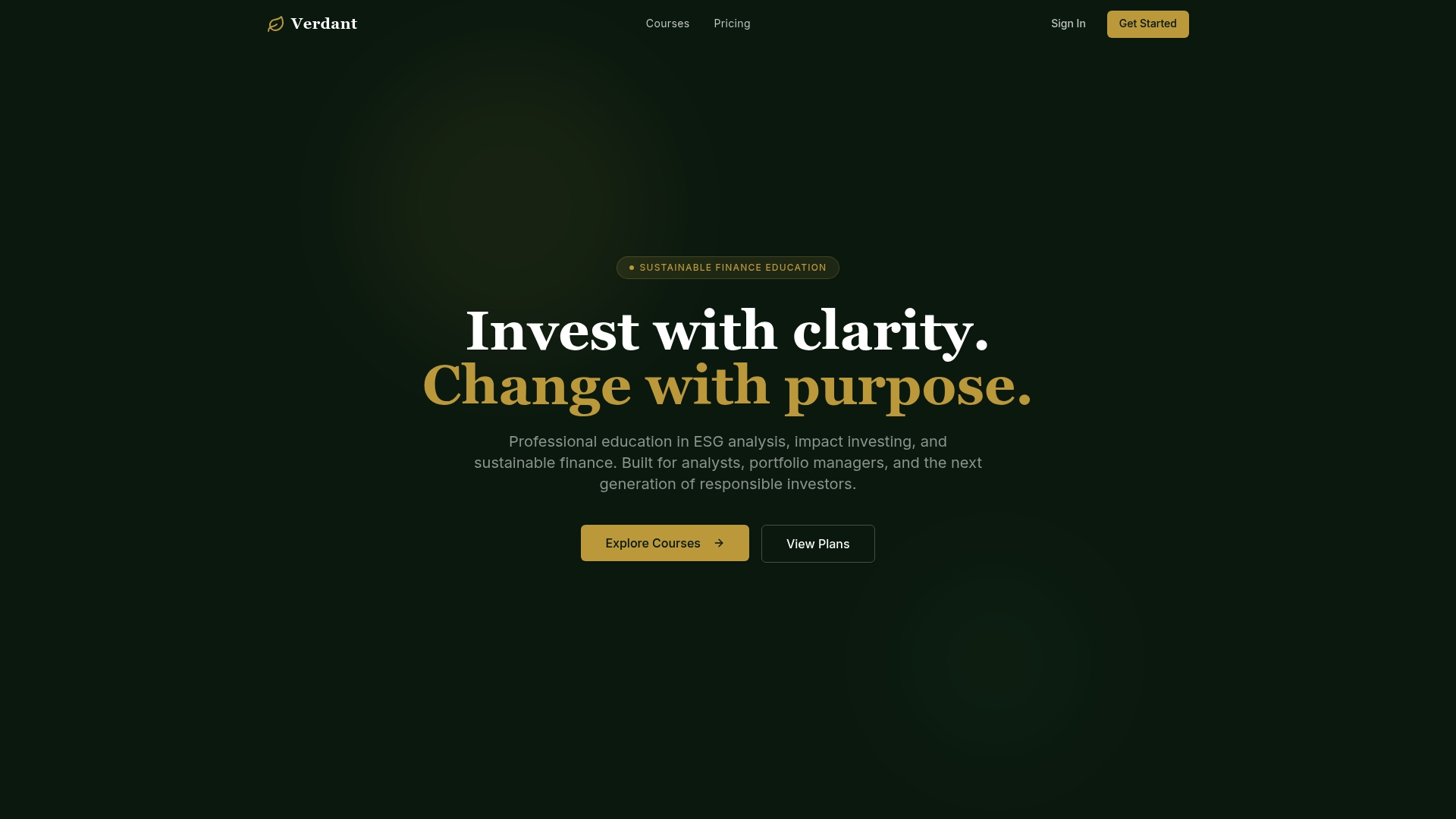
Take control of your sustainable finance education with Verdantinstitute’s tailored subscription plans starting at just $18/month for students. Visit Verdantinstitute to explore how you can build your credentials confidently and download certificates that demonstrate your skills for prospective employers. Start your subscription today and access a robust library of 16 courses and over 160 lessons designed for finance professionals and aspiring ESG analysts.
FAQ
What makes Verdantinstitute a good option for ESG training courses?
Verdantinstitute offers structured learning paths that include 16 courses and 160+ lessons, making it suitable for both students and professionals. The platform also tracks CPD hours and provides downloadable certificates for course completions, adding measurable value for career advancement.
How does Verdantinstitute compare to earth academy?
Earth Academy boasts a global student base of over 28,000 learners and focuses on practical sustainability topics. While Earth Academy provides a wide range of beginner to advanced courses, Verdantinstitute's offerings include specific advanced practitioner modules that cater more directly to ongoing professional development in sustainable finance.
Which platform offers better value for various levels of ESG training?
Verdantinstitute has flexible subscription plans with student access starting at just $18 per month, catering to learners at different stages. In contrast, Earth Academy, while popular, does not list transparent pricing which may complicate budgeting for organizational training needs.
Can i use Verdantinstitute if i'm looking for industry-recognized certifications?
Yes, Verdantinstitute provides downloadable certificates upon course completion, which can enhance your professional profile. This feature helps document CPD hours, making it easier to validate your skills when applying for jobs or promotions.
What advanced topics do the courses at Verdantinstitute cover?
Verdantinstitute includes advanced courses on topics like transition finance and net zero strategies within its practitioner modules. These specialized courses allow learners to gain technical skills in ESG integration that are crucial for advanced roles in sustainable finance.