

Sustainable finance specialization is defined as the deliberate focus of a finance professional's skills on integrating ESG (Environmental, Social, and Governance) factors into financial analysis, product structuring, and investment decision-making. If you are a finance student or practitioner deciding how to specialize in finance, this choice has never carried more weight. Regulatory frameworks like the EU Sustainable Finance Disclosure Regulation (SFDR), the Corporate Sustainability Reporting Directive (CSRD), and the EU Green Taxonomy have transformed ESG from a niche interest into a core competency that banks, asset managers, and development finance institutions now require. Organizations like the CFA Institute and ICMA have responded with dedicated credentials, and advisory firms like Chronos Sustainability have published career guides confirming that specialized ESG skills now command a measurable hiring premium.
How to choose a sustainable finance specialization that fits your career
The first step is understanding that "sustainable finance" is not a single job title. It is a cluster of distinct specializations, each requiring a different skill set, and choosing the wrong one for your background wastes years of effort. The industry-recognized term for this career decision is sustainable finance specialization selection, and it requires mapping your existing strengths against the market's most in-demand tracks.
The four core specialization tracks
ESG data analysis focuses on sourcing, cleaning, and modeling environmental and social datasets from providers like MSCI, Sustainalytics, and Bloomberg ESG. Professionals in this track spend most of their time building quantitative models that translate raw ESG scores into portfolio risk metrics.

Sustainable investment covers fund management and advisory roles where ESG criteria are embedded into asset allocation, stock selection, and portfolio construction. This track suits professionals with a background in equity research or fixed income who want to apply sustainability lenses to traditional investment processes.
Green bond and sustainable debt structuring is a capital markets specialization. Practitioners here work on green bond issuance and sustainability-linked loans, following ICMA Green Bond Principles and EU Taxonomy alignment requirements. Roles sit inside investment banking, development banks, and corporate treasury teams.
Climate risk modeling is the most technically demanding track. It requires proficiency in scenario analysis under frameworks like TCFD (Task Force on Climate-related Financial Disclosures) and the use of physical and transition risk models to stress-test bank portfolios and insurance books.
| Specialization | Core skills | Typical roles | Key frameworks |
|---|---|---|---|
| ESG data analysis | Quantitative modeling, Python/R, data sourcing | ESG analyst, data scientist | SFDR, CSRD |
| Sustainable investment | Portfolio construction, ESG integration | Portfolio manager, ESG research analyst | EU Taxonomy, PRI |
| Green bond structuring | Debt capital markets, legal documentation | Sustainability finance structurer, DCM analyst | ICMA Green Bond Principles |
| Climate risk modeling | Scenario analysis, stress testing | Sustainability risk analyst, climate risk officer | TCFD, EBA guidelines |
Sustainable finance roles commonly require proficiency with green bonds, sustainability-linked loans, and climate risk analytics. That breadth means generalist knowledge is insufficient. You need to pick one track and go deep.
Pro Tip: Before committing to a track, spend two weeks reading actual job postings for roles you want in three years. The skills listed in the "requirements" section of a Vice President, Sustainability Finance posting at ING or a Senior Risk Analyst role at Luminor Group will tell you more than any career guide.
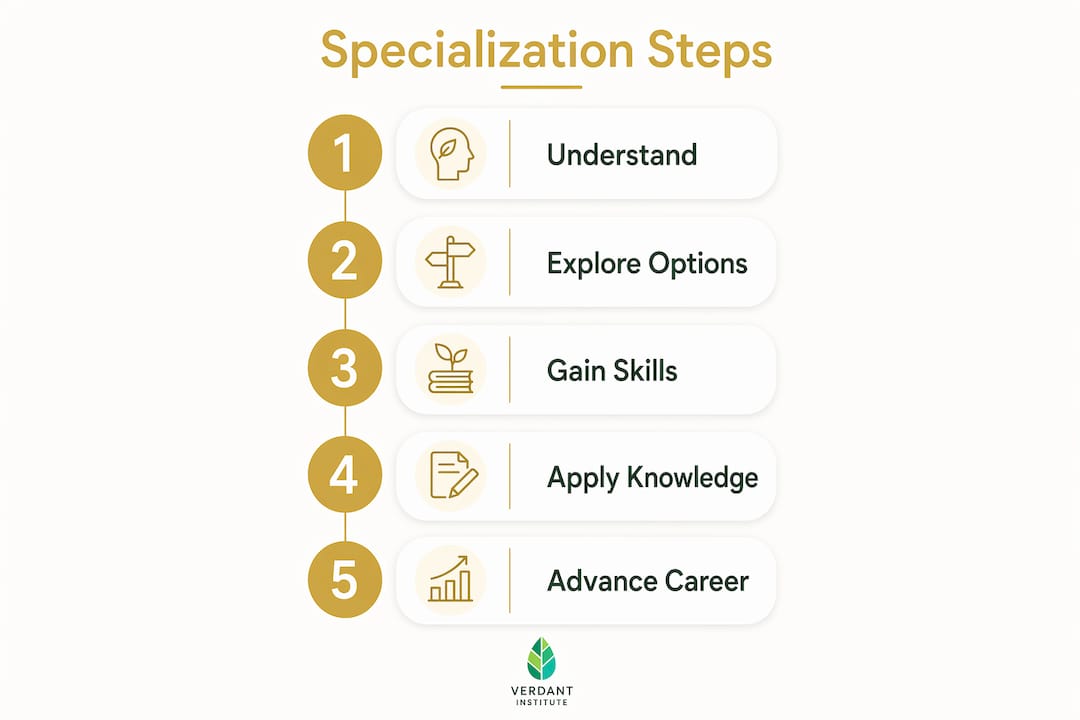
What prerequisites and tools do you need?
Pursuing sustainable finance as a specialization requires a specific combination of academic background, professional credentials, and technical tools. The good news is that the entry bar is well-defined.
Educational background
A degree in finance, economics, mathematics, or environmental science provides the strongest foundation. Finance and economics graduates hold an advantage in quantitative tracks. Environmental science graduates often excel in climate risk and regulatory roles where understanding physical risk metrics matters. Neither background is disqualifying for any track, but you will need to fill gaps deliberately.
Certifications that employers recognize
The CFA Institute's ESG Certificate has become the most widely recognized credential in the field, valued by banks and asset managers globally. ICMA offers a green and social bond certificate that is highly regarded in debt capital markets. For regulatory depth, university certificates from Imperial College London's Executive Education program or structured online programs provide structured coverage of SFDR, CSRD, and Taxonomy requirements.
Key credentials worth pursuing include:
- CFA Certificate in ESG Investing: Recognized by major asset managers and banks as a baseline credential for ESG analyst roles.
- ICMA Green Bond and Social Bond Certificate: Directly relevant for structuring and capital markets roles.
- University-level sustainable finance certificates: Programs from institutions like Imperial College London cover sustainability leadership skills and strategic integration.
- CPD-tracked online programs: Platforms like Verdantinstitute offer structured learning tracks from foundations through advanced practice, with CPD tracking built in.
Technical tools and regulatory literacy
Employers value candidates who can integrate ESG datasets into financial models and communicate sustainability impacts to stakeholders. That means proficiency in Excel-based financial modeling is non-negotiable, and familiarity with Python or R is increasingly expected in data-heavy roles. For regulatory knowledge, reading primary source documents matters more than reading summaries.
Pro Tip: Download and read the actual SFDR Level 2 Regulatory Technical Standards and the EU Taxonomy Climate Delegated Act. Most candidates rely on summaries. Candidates who can cite specific articles in interviews stand out immediately. This is one of the fastest ways to build a competitive regulatory edge.
How do you select the right specialization for your goals?
Choosing the right sustainable finance track is a strategic decision that depends on three variables: your quantitative aptitude, your target sector, and the regulatory environment where you plan to work.
Start with an honest skills audit. If you find financial modeling and data analysis energizing, ESG data analysis or climate risk modeling will suit you. If you prefer strategy, client communication, and deal execution, sustainable investment or green bond structuring will be a better fit. Strong persuasion and communication skills are as critical as quantitative expertise in this field. The professionals who advance fastest combine both.
Next, consider your target sector:
- Banking and capital markets: Green bond structuring and sustainability-linked loan expertise are the most valued skills. ING, BNP Paribas, and HSBC all have dedicated sustainable finance teams that recruit from capital markets backgrounds.
- Asset management: ESG integration into portfolio construction and fund-level SFDR compliance are the priority. Firms like BlackRock, Amundi, and Schroders have built large ESG research teams.
- Development finance: Institutions like the European Investment Bank and the World Bank Group prioritize climate risk modeling and impact measurement expertise.
- Corporate sustainability: Companies with CSRD reporting obligations need professionals who understand ESG disclosure analysis and can translate regulatory requirements into internal reporting systems.
Regional regulatory expertise is a genuine differentiator. Mastering EU frameworks like SFDR, CSRD, and the Green Taxonomy gives you a competitive edge not just in Europe but globally, as these frameworks are increasingly adopted as international benchmarks.
Pro Tip: Network directly with sustainable finance teams at target employers before you apply. LinkedIn outreach to ESG analysts and sustainability finance structurers generates real intelligence about what skills are valued internally. When you do interview, be prepared to explain the difference between SFDR Article 8 and Article 9 funds in precise terms. Regulatory fluency in interviews is a decisive differentiator that most candidates underestimate.
What does the typical timeline look like for specializing?
The path from generalist finance professional to recognized sustainable finance specialist typically takes two to four years, depending on your starting point and the track you choose.
Graduate schemes at European financial institutions focused on sustainable finance expect applications six to twelve months before start dates. That lead time is longer than most candidates expect. If you are a student targeting a graduate role at a bank or asset manager with a dedicated ESG team, your application timeline needs to start well before your final year.
For working professionals, the path looks different:
- Months 1 to 6: Complete a recognized certification (CFA ESG Certificate or ICMA equivalent) while beginning to apply ESG frameworks in your current role. Use your existing financial modeling skills as a foundation and layer ESG data sources on top.
- Months 6 to 18: Seek project exposure in ESG research, sustainability reporting, or green bond transactions. Internal transfers within large banks are often more accessible than external hires for initial ESG roles.
- Year 2 and beyond: Target specialist roles. Senior sustainable finance positions at institutions like ING require a minimum of five years of relevant experience and proven ability to structure complex sustainable finance solutions.
Compensation reflects the specialization premium. Experienced sustainable finance professionals in roles like Senior Investment and Sustainability Risk Analyst at firms like Luminor Group earn gross monthly salaries in the range of 4,000 to 5,000 EUR. That range reflects the scarcity of professionals who combine financial modeling depth with regulatory fluency.
The most common mistake professionals make is underestimating how much communication and writing skill matters. Leadership in sustainable finance requires moving beyond compliance to embedding sustainability strategy into business models. That requires persuasion, not just analysis. Build both skill sets from the start.
For a structured overview of ESG career pathways and the roles available at each career stage, it helps to map your target trajectory early.
Key takeaways
Choosing the right sustainable finance specialization requires matching your quantitative strengths and sector ambitions to one of four distinct tracks, then building regulatory depth in EU frameworks that employers treat as non-negotiable.
| Point | Details |
|---|---|
| Four distinct tracks exist | ESG data analysis, sustainable investment, green bond structuring, and climate risk modeling each require different core skills. |
| EU regulatory fluency is decisive | Deep knowledge of SFDR, CSRD, and the EU Green Taxonomy separates competitive candidates from generalists in interviews. |
| Timeline starts earlier than expected | Graduate scheme applications require six to twelve months of lead time; specialist roles require five or more years of experience. |
| Both quantitative and communication skills matter | Employers value professionals who can model ESG data and persuade stakeholders to act on sustainability findings. |
| Certifications signal credibility | The CFA ESG Certificate and ICMA credentials are the most recognized baseline qualifications for sustainable finance roles. |
Why I think most people approach this specialization decision backwards
Most finance professionals I speak with approach sustainable finance specialization by asking "What certifications should I get?" That is the wrong starting question. Certifications are outputs of a career strategy, not the strategy itself.
The professionals who build the most durable careers in this field start by picking a sector and a role type, then work backwards to identify the exact regulatory knowledge and technical skills that sector demands. A green bond structurer at a development bank needs different depth than an ESG data analyst at a hedge fund. Treating these as interchangeable paths because they both fall under "sustainable finance" is a mistake I see repeatedly.
The other thing I would push back on is the assumption that EU regulatory knowledge only matters if you plan to work in Europe. SFDR and CSRD are becoming the de facto global standard for sustainability disclosure. Firms in Singapore, New York, and Sydney are hiring professionals who understand these frameworks because their European clients and regulators require it. Investing time in EU framework mastery is not a regional career bet. It is a global one.
Finally, do not skip the communication side of this work. The most technically skilled ESG analyst I have encountered lost a senior role to a candidate with slightly weaker modeling skills but far stronger ability to present findings to an investment committee. Sustainable finance requires you to change how institutions allocate capital. That is a persuasion job as much as an analysis job.
— Charles
Start building your sustainable finance expertise with Verdantinstitute
Verdantinstitute is built specifically for finance professionals and students who want structured, credible training in sustainable finance and ESG analysis. The platform offers 16 courses and over 160 lessons organized into learning tracks that move from foundational ESG concepts through advanced practice areas like transition finance and net-zero strategies.
Student plans start at $18 per month and professional plans at $58 per month, both with CPD tracking and certifications that support your career progression. Whether you are preparing for your first ESG analyst role or building toward a senior structuring position, Verdantinstitute's structured curriculum gives you the regulatory depth and technical skills employers are actually hiring for. Explore the full course catalog and pricing to find the plan that fits your timeline and goals.
FAQ
What is a sustainable finance specialization?
A sustainable finance specialization is a focused area of expertise within finance that integrates ESG factors, sustainability regulations, and responsible investment frameworks into financial analysis and decision-making. The four main tracks are ESG data analysis, sustainable investment, green bond structuring, and climate risk modeling.
How long does it take to specialize in sustainable finance?
The typical path takes two to four years for working professionals, starting with a recognized certification in the first six months and progressing to specialist roles after building relevant project experience. Graduate scheme applicants should begin the process six to twelve months before their target start date.
Which certifications are most valued in sustainable finance careers?
The CFA Institute's Certificate in ESG Investing is the most widely recognized credential across banks and asset managers. The ICMA Green Bond Certificate is highly valued for capital markets roles. Both are considered baseline qualifications for competitive sustainable finance positions.
Do I need to know EU regulations to work in sustainable finance?
Mastering EU frameworks like SFDR, CSRD, and the EU Green Taxonomy provides a competitive advantage even outside Europe, as these frameworks are increasingly adopted as global benchmarks. Candidates who can explain SFDR Article 8 versus Article 9 fund classifications in interviews consistently outperform those with only general sustainability knowledge.
What salary can I expect in a sustainable finance role?
Experienced sustainable finance professionals in senior roles earn in the range of 4,000 to 5,000 EUR gross per month, depending on their depth of expertise in ESG modeling and risk management. Compensation scales with regulatory fluency and the complexity of financial instruments you can structure.