

Impact investing is the practice of deploying capital to generate measurable positive social or environmental outcomes alongside a financial return. The Global Impact Investing Network defines this dual goal as the field's core identity, and the market has grown to reflect it. The global impact investing market exceeded $1.571 trillion in late 2025. That scale signals a shift from niche strategy to mainstream finance. For anyone exploring impact investing concepts as a beginner, the timing to learn this field has never been better.
What are the core impact investing concepts beginners should understand?
Impact investing is defined by three attributes: intentionality, measurability, and financial return. Intentionality means you choose investments specifically because they target a social or environmental problem. Measurability means you track whether that change actually happens. Financial return separates impact investing from philanthropy entirely.
Impact investing intentionally seeks positive, measurable outcomes alongside a financial return. That distinction matters because it changes how you evaluate every opportunity. You are not donating capital and walking away. You are deploying it and expecting it to come back, ideally with both money and proof of impact.

The organizations that define this field include the Global Impact Investing Network (GIIN), RSF Social Finance, and Social Finance UK. Each frames impact investing as a tool for systemic change, not just portfolio diversification. Understanding their frameworks gives beginners a credible foundation to build on.
Why does impact investing matter more than traditional investing?
Impact investing outperforms traditional investing on one critical dimension: your capital does more than grow. Financial returns enable reinvestment for sustained, long-term positive impact, unlike one-way philanthropic donations. That cycle of capital redeployment is what makes impact investing structurally different from giving money away.
Traditional investing asks one question: what is the return? Impact investing asks two: what is the return, and what changed in the world because of it? That second question is where beginners often find their motivation.
The issues addressed by impact investing span climate change, affordable housing, healthcare access, gender equity, and financial inclusion. These are not abstract causes. They are measurable problems with investable solutions. Beginners shift from passive, profit-only investments toward active, intention-driven allocations that align with personal values and systemic change goals.
Retail investors now have real access to this space. Minimum investment amounts have dropped significantly, making entry comparable to opening a standard brokerage account. The field is no longer reserved for institutional investors or family offices.
Pro Tip: Start by identifying one problem in the world that genuinely bothers you. That single issue becomes your first impact thesis and keeps your research focused.
How do you prepare to start impact investing?
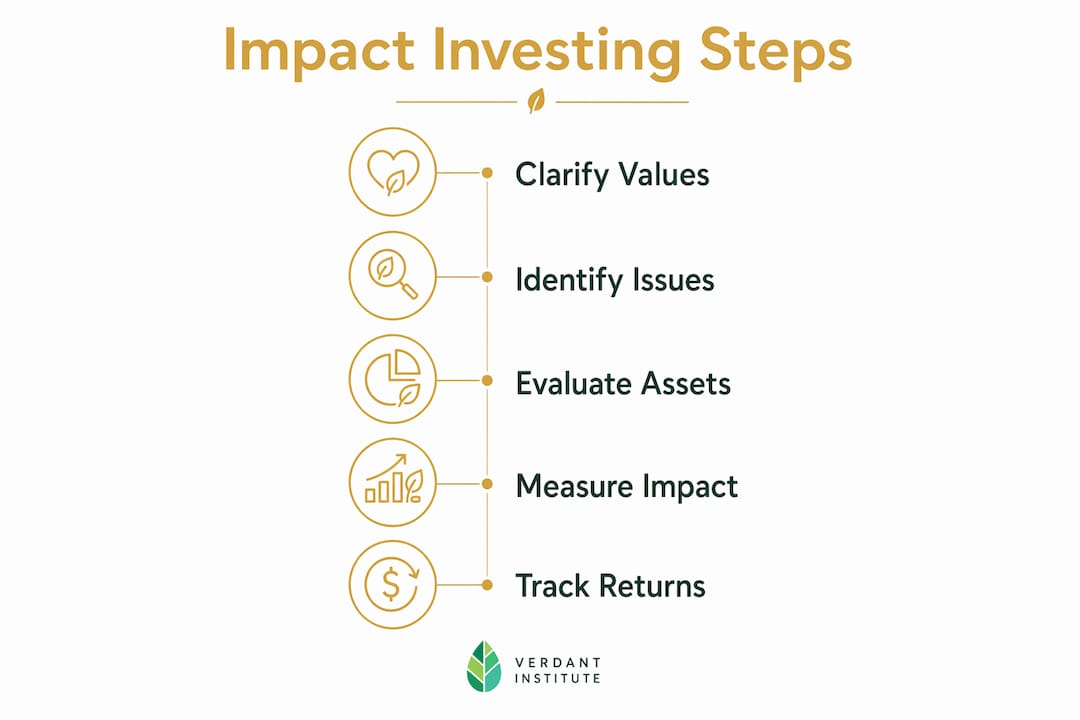
Preparation is the most underestimated phase of impact investing for novices. Most beginners underestimate the time needed to identify their impact goals. This reflection process often takes weeks to months, not hours. Rushing it leads to misaligned investments that feel hollow later.
The preparation phase involves four concrete steps:
- Clarify your values. Write down the social or environmental issues you care about most. Rank them. This list becomes your filter for every investment decision.
- Set a financial baseline. Decide how much you can invest, what return you need, and how long you can hold the investment. These parameters shape which asset classes are realistic for you.
- Choose a framework. A Theory of Change helps you map how a specific investment leads to a specific outcome. Goals-based frameworks work similarly by tying each investment to a defined benchmark.
- Research accessible platforms. Impact investing accessibility expanded significantly by 2025, with low minimum investment amounts comparable to retail brokerage accounts. Platforms like community development financial institutions (CDFIs), green bond funds, and ESG-screened equity funds now serve retail investors directly.
The table below shows how different preparation priorities connect to investment readiness:
| Preparation step | What it unlocks |
|---|---|
| Values clarification | Filters investment opportunities by personal relevance |
| Financial baseline | Determines realistic asset classes and time horizons |
| Theory of Change | Connects capital deployment to measurable outcomes |
| Platform research | Identifies accessible entry points for retail investors |
How do you select the right impact investments?
Selecting impact investments requires you to evaluate three things at once: the type of asset, the quality of the impact claim, and the financial return expectation. Getting all three right is what separates a genuine impact investment from a marketing label.
Understanding asset classes and strategies
Impact investments span equity, debt, real assets, and funds. Equity investments give you ownership in companies solving social or environmental problems. Debt instruments, such as green bonds or social bonds, lend capital to projects with defined impact outcomes. Funds pool capital across multiple investments, which reduces risk and simplifies due diligence for beginners. The full range of impact investing asset classes is broader than most beginners expect.
ESG integration vs. true impact investing
Impact investing differs fundamentally from ESG integration. ESG screening filters out companies with poor environmental, social, or governance records. Impact investing actively targets measurable positive outcomes. An ESG fund might exclude a coal company. An impact fund might finance a solar energy company in an underserved region and measure the kilowatt-hours delivered to households that previously had no power. The distinction between ESG and impact is one of the most important concepts beginners need to internalize early.
Evaluating financial return expectations
Approximately 67% of impact investors target risk-adjusted market-rate financial returns. That means most impact investors are not sacrificing returns for values. The remaining 33% either accept below-market returns or prioritize capital preservation, often in higher-risk or early-stage investments. Knowing which category fits your goals prevents disappointment later.
Pro Tip: When evaluating any impact investment, ask the fund manager for their impact measurement methodology. If they cannot name a specific metric or third-party verification standard, treat the impact claim with skepticism.
- Evaluate intentionality: does the investment explicitly target a defined social or environmental outcome?
- Assess measurability: does the fund report impact data using recognized standards such as IRIS+ or the UN Sustainable Development Goals?
- Check financial benchmarks: does the expected return match your financial needs and risk tolerance?
- Review additionality: would this outcome happen without your capital? True impact investments often fund projects that cannot access conventional financing.
What mistakes do impact investing beginners most often make?
The most common mistake is conflating impact investing with ESG screening or philanthropy. Many new impact investors mistakenly conflate ESG integration with impact investing. That confusion leads to portfolios that feel responsible but do not generate measurable change.
A second mistake is analysis paralysis. The field is broad, the terminology is dense, and the number of funds and platforms is growing fast. Beginners who try to evaluate everything at once rarely invest at all.
"The most effective beginners' framework is to focus initially on one impact goal, selecting two benchmarks, one financial and one social, to evaluate opportunities." — ImpactAlpha
Set manageable, goals-based frameworks focusing initially on a single impact goal. That constraint forces clarity and prevents overwhelm. Once you have made your first investment and tracked it for a year, adding complexity becomes natural rather than paralyzing.
Other common pitfalls include:
- Skipping the values clarification phase and jumping straight to product selection
- Treating impact investing as a fixed strategy rather than an evolving one
- Ignoring the need for professional guidance when portfolio complexity grows
- Failing to revisit impact goals as personal values and financial circumstances change
Impact investing requires viewing your strategy as evolving. Early investments are often small and theme-specific. They grow in sophistication as your values clarify and your experience builds. Expecting a perfect portfolio on day one sets you up for frustration.
Key Takeaways
Impact investing is defined by intentionality, measurability, and financial return. Beginners who internalize this definition before selecting any product will make better decisions at every stage.
| Point | Details |
|---|---|
| Dual goal definition | Impact investing targets measurable positive outcomes and financial returns simultaneously. |
| ESG is not impact | ESG screens out bad actors; impact investing actively funds measurable positive change. |
| Preparation takes time | Clarifying your values and goals often takes weeks, not hours. Start before you invest. |
| Start with one goal | Focus on a single impact theme with two benchmarks to avoid analysis paralysis. |
| Returns are competitive | 67% of impact investors target risk-adjusted market-rate returns, not below-market ones. |
Why I think most beginners approach impact investing backwards
Most people I see entering this space start by searching for funds. They find a list, pick one with a name that sounds good, and call it impact investing. That approach almost always leads to disappointment, because the fund was never matched to a real personal conviction.
The right starting point is not a product. It is a problem. Pick one issue you genuinely care about, whether that is clean water access, affordable housing, or climate adaptation in vulnerable communities. Then build your investment criteria around that problem. What would a solution look like? Who is funding it? What does success actually measure?
I have seen beginners build more coherent portfolios in six months using this problem-first approach than experienced investors build in years of product-first searching. The reason is simple: conviction creates patience. When you know why you own something, you hold it through volatility and track its impact with genuine interest.
The field rewards people who treat their impact investing thesis as a living document. Revisit it annually. Add complexity only when you have the knowledge to evaluate it. And do not let the perfect be the enemy of the good. A small, well-understood investment in a cause you believe in beats a large, confused allocation every time.
— Charles
Build your impact investing knowledge with Verdantinstitute
Verdantinstitute is built specifically for people at this stage of the learning curve. The platform offers structured learning tracks that take you from foundational impact investing basics through advanced topics like transition finance and net-zero strategies. With over 160 lessons across 16 courses, you can move at your own pace and earn CPD-recognized certifications as you go.
Student plans start at $18 per month and professional plans at $58 per month. Both include access to the full course library and CPD tracking. If you are ready to move from reading about impact investing to building real expertise, explore Verdantinstitute's learning tracks and find the plan that fits your goals. You can review all pricing options before committing.
FAQ
What is impact investing in simple terms?
Impact investing is the practice of putting money into companies or funds that generate measurable positive social or environmental outcomes alongside a financial return. It differs from philanthropy because you expect your capital back, often with a profit.
How is impact investing different from ESG investing?
ESG investing screens out companies with poor environmental, social, or governance records. Impact investing actively targets and measures positive outcomes. ESG is a filter; impact investing is a goal.
How much money do I need to start impact investing?
By 2025, minimum investment amounts for impact investing had dropped to levels comparable to standard retail brokerage accounts. Many green bond funds, CDFIs, and impact equity funds are accessible to everyday investors.
What return should I expect from impact investments?
Approximately 67% of impact investors target risk-adjusted market-rate returns, meaning most do not sacrifice financial performance for values. A minority accept below-market returns in exchange for higher-risk or early-stage impact opportunities.
What is the biggest mistake beginners make in impact investing?
The most common mistake is confusing ESG screening with true impact investing, or skipping the values clarification phase entirely. Starting with a single, clearly defined impact goal and two measurable benchmarks prevents both errors.